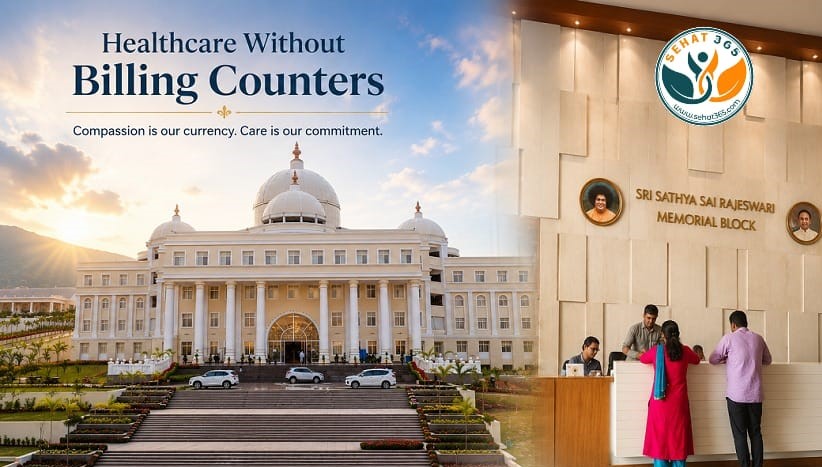
- The true impact of healthcare is measured not in buildings or equipment but in lives transformed.
New Delhi, Sehat Correspondent
In much of the world, falling ill can trigger a financial crisis. For millions of families, particularly in developing countries, a hospital visit often means choosing between medical treatment and essential needs such as food, education, or housing. Healthcare costs continue to push vulnerable households deeper into poverty, leaving countless people without access to the care they need. Against this backdrop, the One World One Family Mission is demonstrating that another model is possible, one where healthcare is delivered entirely free of charge and where compassion, rather than profit, drives every decision.
Its approach is simple yet revolutionary: hospitals without billing counters. Across India, the United States, Fiji, Sri Lanka, and Nigeria, the Mission has established a growing healthcare network where consultations, diagnostic tests, surgeries, medicines, and follow-up care are provided completely free. The initiative is built on a belief that healthcare is a fundamental human right and should never depend on a person’s ability to pay.
A Global Network of Care
What began as a service-oriented vision has evolved into a global healthcare movement. In the United States, the Sri Sathya Sai Sanjeevani Medical Centre in Clarksdale, Mississippi, serves uninsured and underinsured populations in one of the country’s most economically challenged regions. Patients receive high-quality medical care without financial burden, while transportation assistance is provided for those unable to travel. India remains the largest hub of the Mission’s healthcare activities. Its institutions include Sri Sathya Sai Sanjeevani Centres for Child Heart Care, Mother and Child Hospitals, Sai Aarogya Multi-Specialty Hospitals, and the Sri Madhusudan Sai Institute of Medical Sciences and Research, India’s first free private rural medical college. The Mission’s presence also extends to Fiji, Sri Lanka, and Nigeria, where healthcare facilities are addressing major gaps in access to specialised treatment.
Restoring Lives and Hope
The true impact of healthcare is measured not in buildings or equipment but in lives transformed. One such story is that of Chika Okafor from Nigeria. For over a decade, she suffered from severe fibroids and struggled to find appropriate treatment. Misdiagnosis and financial limitations left her feeling hopeless. Her life changed when she reached Aruike Specialty Hospital in Enugu, Nigeria. There, she received expert medical treatment, compassionate care, and ongoing support—completely free of cost. Today, Chika has recovered and regained her confidence. Her experience reflects the Mission’s philosophy of treating every patient with dignity, respect, and empathy.
Saving Children’s Hearts
Among the Mission’s most significant achievements is the Sri Sathya Sai Sanjeevani network, widely recognised as the world’s largest chain of paediatric cardiac hospitals providing free treatment. Congenital Heart Disease (CHD) affects nearly eight out of every 1,000 children born worldwide and remains a major cause of infant mortality. For many families, the cost of corrective surgery is beyond reach. To address this challenge, the first Sri Sathya Sai Sanjeevani centre was established in 2012 in Atal Nagar, Chhattisgarh. Since then, the network has expanded across India, Sri Lanka, and Fiji.
More than 40,000 children have received life-saving treatment for congenital heart defects, while over 16,000 catheter-based interventions have been performed. Each successful procedure gives a child the chance to live a healthier and more fulfilling life.
Healthcare Beyond Hospitals
The Mission’s work extends far beyond specialised hospitals. Through more than 130 Sai Swasthya Wellness Centres across India, preventive and primary healthcare services reach underserved communities. Mobile medical units operating under Sai Aarogya Vahini travel to remote villages, providing consultations, medicines, health screenings, and awareness programmes directly at people’s doorsteps. More than 66 percent of beneficiaries of these outreach programmes are rural women, a group that often faces significant barriers to healthcare access. By taking healthcare to the last mile, the Mission is helping ensure that geography no longer determines health outcomes.
Impact at Scale
The scale of the Mission’s work is remarkable. Across its healthcare network, more than 5 million outpatient services have been delivered. Over 160,000 patients have received inpatient care, while more than 80,000 surgeries and advanced interventions have transformed lives. More than 20,000 safe deliveries have supported mothers and newborns, and over 1.2 million outreach health screenings have enabled early diagnosis and preventive treatment. These numbers make it one of the largest free healthcare initiatives operating across multiple continents.
A Lifeline for the Pacific
One of the Mission’s most visible successes is in Fiji. Before the establishment of the Sri Sathya Sai Sanjeevani Children’s Hospital in Suva, families often had to travel overseas for paediatric heart surgeries costing up to US$100,000. For many, such treatment was simply impossible. Since opening in April 2022, the hospital has become the Pacific region’s first dedicated facility providing free paediatric heart surgeries. More than 30,000 children have undergone free echocardiograms, while hundreds have received life-saving cardiac procedures. Supported by an international network of doctors and specialists, the hospital stands as a powerful example of global collaboration in healthcare.
A Model for the Future
The Mission’s vision continues to expand. In Muddenahalli, Karnataka, a 600-bed charitable hospital is under construction and is expected to become one of the world’s largest free private healthcare facilities. Plans are also underway to expand the network to 6,000 wellness centres. At a time when healthcare costs are rising across the world, the One World One Family Mission offers a compelling alternative. Its success demonstrates that medical excellence and compassion can coexist and that quality healthcare can be delivered without financial barriers. Most importantly, it reminds us that healing is about more than treating disease. It is about restoring hope, preserving dignity, and ensuring that every human life is valued equally.
