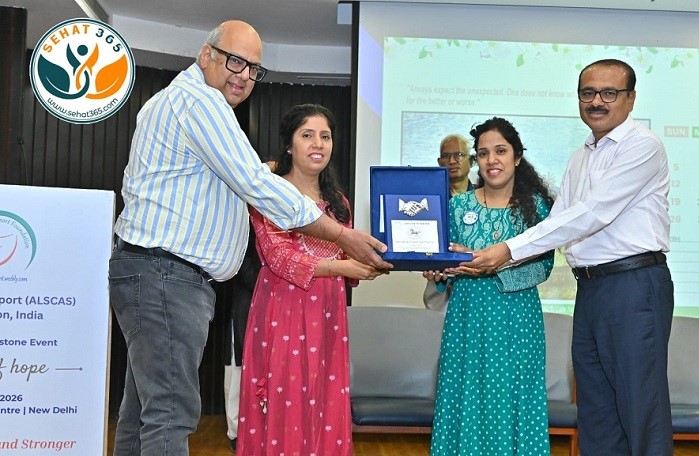
The ALSCAS community has shown that peer support, knowledge sharing, and compassion can transform how families navigate the disease.
New Delhi, 15 March 2026
The ALS Care & Support (ALSCAS) Foundation marked ten years of service to persons living with amyotrophic lateral sclerosis (ALS) and their families with a special anniversary commemoration. The event brought together persons living with ALS (PALS), caregivers, neurologists, researchers, policymakers, patient advocates, and partners from across the healthcare and rare disease ecosystem to reflect on a decade of community-led support and to discuss the future of ALS care, research, and policy in India.
Speaking on the occasion, Satvinder Kaur, co-founder of ALSCAS, said: “When ALSCAS began ten years ago, it was simply a small community of families trying to support one another through an incredibly difficult journey. Today it has grown into a nationwide network that connects patients, caregivers, doctors, and researchers. Our hope is that the coming decade will bring stronger awareness, better care systems, and research that moves us closer to effective treatment.” The event featured remarks from leading experts and international partners, including Dr R.K. Dhamija, Professor of Neurology and Director, Institute of Human Behaviour and Allied Sciences; Dr Gourie Devi, Senior Consultant Neurologist at Sir Ganga Ram Hospital; and Manish Raisinghani, CEO of Target ALS.
Dr Vineeth Jaison, Professor of Neurology at CMC Ludhiana, spoke on the future of ALS care and emerging directions in research and treatment. A panel discussion deliberated on key challenges in ALS care in India, including delayed diagnosis, access to multidisciplinary care, emerging therapies, and the need for stronger collaboration among clinicians, researchers, patient organisations, and policymakers.
The panel featured leading neurologists and experts, including Dr Vishnu VY, AIIMS; Dr M. Faruq, CSIR-IGIB; Mr Prasanna Shirol, Organization for Rare Diseases India; Dr P. K. Misra, Sant Parmanand Hospital; Dr Ashutosh, Saroj Hospital; and Dr Ratna Devi, DakshamA Health & Education.
The programme also showcased the role of technology in improving the quality of life of PALS, including demonstration of assistive communication tools and digital applications designed to support patients and caregivers. A special kiosk displayed assistive devices used by ALSCAS members to enable communication, mobility, and home-based care. Reflecting on what it means to live with ALS, Sukhvinder Kaur, co-founder of ALSCAS, said, “It is not only a medical challenge, it affects families emotionally, socially, and economically.
The ALSCAS community has shown that peer support, knowledge sharing, and compassion can transform how families navigate the disease. Looking ahead, stronger collaboration across science, healthcare, policy, and the patient community will be essential for improving care and accelerating progress toward a cure.”
The event concluded with a renewed call for greater attention to ALS within India’s rare disease landscape, including inclusion of ALS in India’s National Policy for Rare Diseases, expanded patient support systems focussing on development of multidisciplinary ALS care centres across the country, and stronger investment in research and clinical trials aimed at developing effective therapies. As ALSCAS enters its second decade, the organisation reaffirmed its commitment to working alongside patients, caregivers, clinicians, researchers, and policymakers to improve care, advance research, and build a stronger support ecosystem for people living with ALS in India.
The anniversary programme included a poster gallery walk and the screening of a short film capturing ten years of ALSCAS, and the lived experiences of patients and families. The founders reflected on the organisation’s journey and the growing need for stronger support systems for the ALS community in India.
