New Delhi,
Health Reporter for Sehat365.com
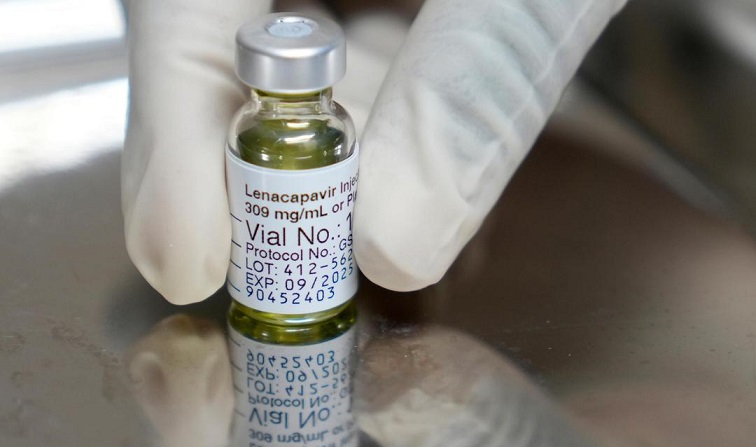
This World AIDS Day, India faces a critical moment in its effort to end AIDS nationally and globally. The transformative potential of lenacapavir, a groundbreaking new long-acting HIV prevention medicine that confers virtually 100% protection against HIV infection, risks being undermined by regulatory delays and patent-related barriers.
If unaddressed, these barriers will obstruct access to lenacapavir for marginalised communities most affected by the epidemic, including sex workers, transgender persons, gay men and other men who have sex with men, and people who use drugs (known as “key populations”), as well as young women and girls.
Key populations are disproportionately represented among the 1.3 million people who acquire HIV every year. Outside of sub-Saharan Africa, two out of three new infections are among key populations and their sex partners. Global numbers of new HIV infections have remained virtually unchanged for 3 years, indicating the need for more effective HIV prevention tools, deployed at scale as an urgent global priority.
Although Indian generic manufacturers are well-positioned to supply lenacapavir at affordable prices, regulatory delays and Gilead’s patent filings threaten to delay access globally. Under India’s New Drugs and Clinical Trials Rules (NDCTR) 2019, companies may seek a waiver of India’s requirement that drug companies conduct local clinical trials as a condition of regulatory
Approval, so long as a medicine has been approved by the drug regulatory authorities of the US (USFDA), European Union (EMA), and other “specified countries” and offers a “significant therapeutic advance.” Lenacapavir for HIV prevention has been widely recognised by UNAIDS, WHO and other technical normative agencies as a significant advance that can bring new infections under control. Without this waiver, the timely global introduction of Indian generics would be substantially hindered.
“Indian manufacturers can reduce the price of generic lenacapavir to US$25–40 (₹ 2,225 – 3,560) per person per year, which would be a game changer for countries such as South Africa, which has the highest number of new HIV infections in the world. Unnecessary regulatory delays will mean India cannot supply generic lenacapavir in 2026, weakening its role in supplying affordable HIV medicines for the world,” said Fatima Hassan of South Africa’s Health Justice
Initiative. “This will have a devastating effect across low- and middle-income countries that depend on Indian generics, and especially countries like ours that are being targeted by the Trump administration by arbitrary exclusion from the Gilead / PEPFAR global rollout program. We need generics urgently to save lives.”
“Few medical interventions demonstrate such remarkable efficacy. In clinical trials, lenacapavir has shown 100% effectiveness in preventing HIV among cisgender women and girls, and a 96% reduction in HIV risk within a gender-diverse group that includes cisgender men, transgender men, and non-binary individuals. Now we need the policies that will allow us to deliver this superior protection tool to all who need it, including a waiver of India’s requirement for national clinical trials,” said Dr Antonio Flores, Senior HIV/TB Advisor, MSF.
Community networks warn that the consequences of delay are immediate and severe. “Access to more effective HIV prevention tools like lenacapavir from the HIV programme free of cost is vital because our exposure to HIV through sex work is a daily worry for us,” said Dr Protim Ray, representative of Kolkata-based, sex worker–led collective Durbar Mahila Samanwaya Committee. “When revolutionary prevention tools like lenacapavir are delayed or locked behind red tape, it’s not just policy — it’s our lives at stake.”
In addition to regulatory barriers, health groups including the Third World Network have raised serious concerns about Gilead’s patent filings on lenacapavir in India, arguing that the claims may lack sufficient novelty and, if granted, could restrict open competition among generic manufacturers producing active pharmaceutical ingredients (API) and finished formulations directly undermining India’s capacity to manufacture and supply affordable generics. While Gilead has granted royalty-free, non-exclusive licenses to six generic manufacturers, including four Indian companies — to supply lenacapavir to 120 low- and lower-middle-income countries and territories, key regions with high HIV incidence among key populations, including parts of Latin America, are excluded, undermining equitable global access and unnecessarily restricting local production.
Granted patents in India will block Indian generic companies that have not been granted a Gilead license from supplying locally or to countries excluded from Gilead’s list of 120 eligible countries, and thus, Gilead’s multiple patent claims must be expeditiously rejected.
“A decisive action is urgently needed. Regulatory authorities, patent offices, and global partners must work together to ensure that long-acting HIV prevention becomes accessible without delay, and that communities most at risk are not once again left behind,” said Eldred Tellis of the global LEN-LA for All Coalition. This coalition includes Health GAP (Global), the Health Justice Initiative (South Africa), Sankalp Rehabilitation Trust (India), Just Treatment (UK), and ABIA (Brazil).

Senior Reporter