By, Swapna Tarafdar
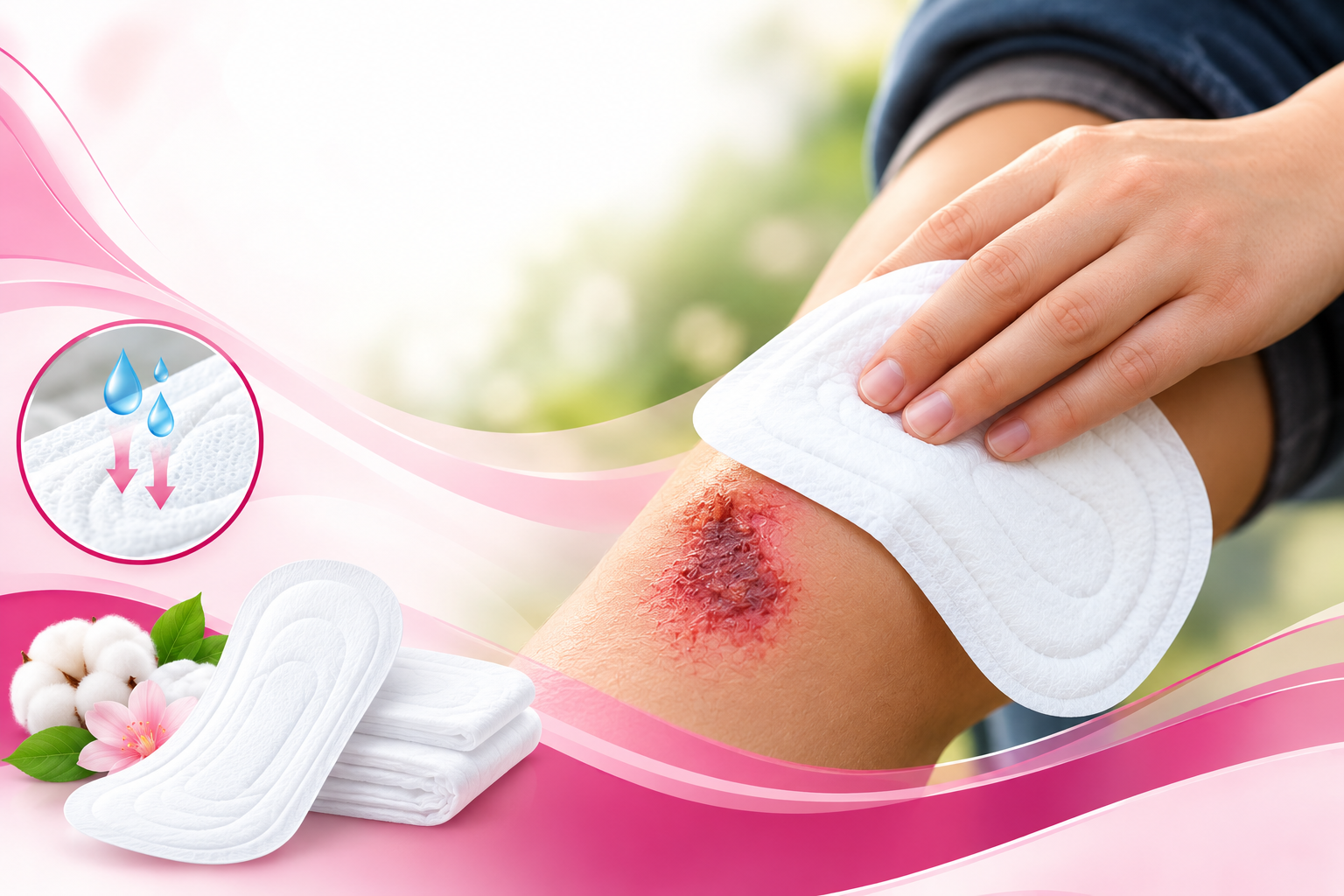
Your bandage supply is running low at home, and the bleeding wound requires immediate attention. Do not panic. Just reach for a sanitary napkin.
Sanitary napkins used by women during menstruation are being prescribed by doctors for dressing wounds. The super absorbent, gel-filled sanitary pads are as good as the old cotton and gauze dressings.
Experts say sanitary pads have been designed to absorb blood and prevent leaks. “Once you have a surgical wound you need to be careful that there is no spread of infection in and around the wound. A bandage protects your incision, creating an ideal environment for healing. The aim of using a sanitary pad on stop-gap basis is to dry the wound. So instead of visiting the hospital on a regular basis for the dressing, patients can Do-it-yourself with sanitary napkins.”Dr Manu Shankar, clinical director, minimal invasive surgery, Marengo Asia Hospital, Faridabad said.
“We advise the patients to use it as a sanitary padi is sterilised, infection free, and does not stick to the wound, easy to change and works the same way as does any other bandage.”
The All India Institute of Medical Sciences (AIIMS) Delhi has tried and tested the method on its patients too. “It was prescribed for patients who come from far off places. If they require dressing, they cannot travel to the hospital every day. So, to help the patients dress their post-operative wounds at home instead of going to the hospital, we prescribe they purchase sanitary napkins and do their dressing all by themselves,” said Dr Anurag Srivastava, retired professor of surgery at AIIMS Delhi.
Cellucotton, the material used to make Kotex sanitary pads, was used in World War 1 hospitals as a bandage.
“Practical, effective, and inexpensive wound dressings are important considerations in patients with chronic wounds. Feminine hygiene sanitary pads (FHSPs) are a cost-effective alternative to conventional dressings for intertriginous wounds. They are safe alternative to expensive dressing,” Jarett Casale from the Department of Dermatology, Campbell University School of Osteopathic Medicine, Lillington, NC, United States said.
Dressing is an important component of wound care and basic and practical knowledge of dressing material is imperative for faster wound healing. Choice of dressing depends upon the type of wound, infection, discharge, and safety.
Gauze, lint, plasters, bandages (natural or synthetic), and cotton wool are common dry items used as primary or secondary dressings for wounds to prevent contamination.
(The writer has worked in PTI, Muscat Daily, The Statesman, Metro Now and Today of India Today Group)
